

Script
1 scene · 0:21
Scene 1
0:21
SCENE CONTEXT
A 25-second short film in six cuts. An army is coming. The portcullis of a mountain fortress is already coming down as the last panicked people and soldiers squeeze in under it, and the knight sprints last toward the gate, a big shield on his arm and a small light-grey cloth pouch tied with a white ribbon bouncing at his belt. A few strides from the gate the cord snaps and the pouch falls into the mud. He spins round at once and runs back for it. As he scoops it up and turns back to the gate, the traitor at the winch throws the release lever: the slowly lowering portcullis drops all at once and crashes down. Behind the bars the traitor smiles, his hand still on the lever. Off-screen, the enemy commander shouts "Loose!". The knight drops to one knee behind his shield as the arrows hit it, and opens the pouch: his wife's ring and his son's little wooden horse. A tear runs down in his eyes. He throws the shield away, draws his sword and charges the archers. An arrow from the archers ahead hits the front of his shoulder and knocks him. He keeps running. Cut to black.

CAST AND REFERENCES
@knighteyes is the knight, visor closed in every cut, his eyes visible through the wide eye opening, a longsword at his hip, and a small light-grey cloth pouch tied with a white ribbon hanging from his belt on a thin cord. @shield is his shield, carried on his left arm: a large kite shield, tall enough to cover him from his helmet to his knees when he kneels behind it; it matches its reference exactly in shape, size and design. @traitor is the man at the winch inside the gate. The fleeing people and soldiers and the enemy archers have no reference: ordinary people in plain wool and soldiers in mail; the archers are about thirty grey silhouettes in the fog.

LOCATION MAP
A grey stone mountain fortress at blue hour. Its gatehouse has one deep dark arch with a heavy iron portcullis, its spiked lower edge coming down on a chain. Inside the arch, just behind the portcullis, stands the iron winch with its long release lever, and a single torch burns on the wall beside it. A muddy road climbs straight to the gate across open, trampled ground. Behind the knight, the way he came: the open slope falling away, and about 70 m off, on a low ridge in the fog, a line of about thirty enemy archers. Beyond and around everything, mountains fading ridge after ridge into grey-blue fog. In every side view the gate is on the left of the frame and the enemy on the right.

FIRST FRAME / BLOCKING
16:9. Handheld tracking shot from behind and slightly to the right of @knighteyes, sprinting, about 35 mm, at his chest height. He runs flat out up the muddy road toward the gate, @shield on his left arm; at his right hip the small light-grey cloth pouch with the white ribbon bounces on its cord. Ahead, the portcullis is already a third of the way down, lowering slowly on its chain, and the last people and soldiers duck in under it. Already moving: mud spraying from his boots, the camera running with him.

FORMAT MODE
CUT 1 — about 7.5 s, one continuous handheld shot from behind him; the gate stays ahead in the background the whole time. He sprints toward the gate; the portcullis keeps lowering slowly, and the last soldier ducks in under it; behind, off-screen, a long low enemy war horn. A few strides on, the cord at his belt snaps and the pouch drops into the mud just behind him. The camera, running behind him, slows and stops right over it: the pouch lies in the mud in the foreground, the white ribbon bright against it. A stride later he skids to a stop, spins round, takes two quick steps back, scoops the pouch out of the mud with one hand right in front of the lens, and turns back toward the gate, about 10 m away. Ahead of him the portcullis, two-thirds down and still lowering slowly, suddenly drops the rest of the way all at once and slams into the stone with a crash, mud and grit jumping. He stops dead, his back to us, the closed gate in front of him.

CUT 2 — about 2 s. Medium close-up of @traitor behind the portcullis, about 85 mm, from the knight's eye line; the iron bars soft in the foreground. Beside him, his hand still rests on the long iron release lever of the winch, just thrown down; the torchlight falls on one side of his face. He looks at the knight and smiles, a small, cold, closed-mouth smile. Far off-screen, behind the knight, a commander's voice shouts: "Loose!"

CUT 3 — about 4 s, cut on the sound of the arrows. Wide side view from his right, locked off, about 35 mm: the closed gate on the left, the knight in the middle, the slope and the ridge of archers in the fog on the right. He spins toward the archers, drops to one knee and plants @shield in front of himself, angled up toward them; it covers him from helmet to knee. A volley of about twenty arrows rises from the ridge, arcs over and comes down: six or seven slam into the shield, and the rest stick into the mud around him. None touches him.

CUT 4 — about 4 s. Low side view close inside his shelter, about 50 mm. At real speed: in the foreground the inside of the shield; each hit jolts it against his arm, and one arrowhead punches through near its edge a hand's width from his helmet. The camera pushes in to his hands. He pulls the white ribbon loose and tips the pouch. As the ring and the horse fall out, everything slows into slow motion, about a quarter of real speed, like a high-speed camera: the small plain gold ring and the little hand-carved wooden horse turn slowly in the air and settle into his open gauntlet, splinters hanging around them. His gauntlet slowly closes around them.

CUT 5 — about 2.5 s, still in slow motion. Extreme close-up of his eyes through the wide eye opening of the helmet, macro feel, the eyes razor sharp, the steel edges of the opening soft around them. His eyes are on his closed fist, already wet. One tear spills over and runs down the skin inside the eye opening, catching the light.

CUT 6 — about 5 s, cut as he moves. Handheld tracking shot from behind him and slightly to his right, low, about 35 mm, running with him. He rises, throws the shield aside, draws the longsword and charges across the open ground toward the archers on the ridge ahead, small in the fog. About 3 seconds before the end, the archers ahead shoot at him, and the arrows fly toward him from the front. For the last 2.5 seconds, slow motion: one arrow from the archers ahead hits the front of his shoulder and knocks him; no arrow hits his back. He staggers, and keeps running, sword raised, toward the archers. Hard cut to black.

PERFORMANCE
Real, fast, heavy. He sprints flat out from the first frame. When the cord snaps he reacts at once: no pause, no thinking, he spins, takes two steps back and scoops the pouch up. When the portcullis crashes down he stops dead and does not rush the bars: he stands still, understanding. The traitor shows nothing but that small cold smile, his hand resting on the lever; no gesture, no words. Behind the shield the knight is completely still, and everything is in his hands and his eyes: the care with which he pours out the ring and the horse, the slow closing of his fist, the eyes filling, one tear; no sobbing, no shaking. Then a decision, not a gesture: he rises and runs, with a short low roar at most, never a long scream. Hit, he staggers and does not stop.

PHYSICS
The armour is heavy, but he runs fast; his boots sink and spray in the mud. The big shield swings with his run. The cloth pouch bounces on its thin cord until the cord snaps; it drops with a soft thud into the mud. The portcullis lowers slowly on its clanking chain from the first frame; when the lever is thrown, it falls freely, fast and hard, and the ground shudders. The arrows are real wooden arrows with grey fletching, and they always come from the front, from the archers on the ridge: they hit the shield with heavy thuds that jolt it, and others drive into the mud at steep angles. In slow motion, the ring, the wooden horse, splinters and drops of mud hang and drift in the air. The arrow that hits the front of his shoulder knocks him off balance for a moment.

LIGHTING
Blue hour, after sunset, no sun. Soft cold light from the open sky; a steel-blue sheen on the armour, deep shadow in the joints; the metal fittings of the shield catch dull cold highlights. The only warm light in the film is the single torch inside the arch, falling on one side of the traitor's face and on the iron lever behind the bars. In CUT 4 the ring catches one small cold glint of the sky. In CUT 5 the pale sky gives catchlights in his wet eyes, and the tear catches them. Fog fades the ridge and the archers to grey silhouettes. No direct sunlight, no golden light, no flare.

AUDIO
CUT 1, from 0:00.3: fast running footsteps in the mud, his hard breathing inside the helmet, the rattle of the shield, the panicked voices of the crowd squeezing in, and the slow, heavy clank of the portcullis chain lowering; behind, a long low war horn. Then the small snap of the cord, the soft thud of the pouch in the mud, his feet skidding as he spins; the slow clank of the chain; then a sharp clang of the lever, the chain screaming free, and the crash of the iron portcullis on stone, its rattle settling. CUT 2: silence but the wind; far off, a commander's voice: "Loose!" CUT 3: the rising hiss of a volley, then heavy thuds on the shield and in the mud. CUT 4: thuds on the shield at full volume; as the slow motion begins they go dull and distant, as if under water; only his slow breathing is clear, and the faint tiny clink of the ring in his gauntlet. CUT 5: one slow breath inside the helmet. CUT 6: full sound crashes back: the shield thrown down, the ring of the sword drawn, his running steps, a short low roar; the hiss of the arrows; in the slow last seconds, one heavy hit and his breath; then cut to black and silence. No music. The only spoken word is "Loose!".

STYLE
A frame from a modern prestige drama series, photographed on location on 35 mm film through vintage spherical lenses. Cold, restrained grade: slate blue, grey-green and charcoal, low saturation everywhere; the white ribbon, the metal of the shield and the torch are the only accents. Deep true blacks, soft highlights that never clip, fine grain. Depth comes from layered fog fading to grey-blue. Real-world imperfection: mud, wet stone, worn cloth, breath in the cold air. Not CGI, not a video-game cinematic, not a fantasy wallpaper: no golden glow, no orange sky, no sun in frame, no bloom, no oversaturation, no AI gloss.

POSITIVE LOCKS
- @knighteyes, @traitor and @shield match their references 100%. Sheet backgrounds and layouts NOT inherited; @shield controls only the shield.
- The knight's visor is closed in every cut; only his eyes and the skin around them show through the wide eye opening; never his whole face, never a raised visor.
- One shield only: @shield, exactly as in its reference, big enough to cover him from helmet to knee when he kneels. Never a small or round shield.
- CUT 1 is one continuous shot from behind him, with no cuts. He runs toward the gate the whole time; the gate is always ahead of him in the background. He turns away from the gate only for the two steps back to the pouch, then turns back to it.
- The pouch is his own: a small light-grey cloth pouch tied with a white ribbon. It hangs at his belt, falls when the cord snaps, and he scoops it up in CUT 1. No one throws anything. Inside are exactly one small gold ring and one little wooden horse. Nothing else.
- In CUT 6 the pouch, the ring and the horse are no longer seen; he runs with the sword only.
- He runs at full speed until the cord snaps; no slow stops, no long looks. The first time he stands still is when the portcullis crashes down.
- The portcullis is already lowering slowly from the first frame. Near the end of CUT 1 it drops the rest of the way all at once, and it stays down. The knight is outside, about 10 m from it, and never reaches the bars.
- The traitor is seen only in CUT 2, behind the bars, his hand on the release lever of the winch.
- The crowd appears only at the start of CUT 1; after it, the knight is the only person outside the gate.
- About thirty archers, far away on the ridge in the fog, about 70 m, grey silhouettes, never close. The first volley is about twenty arrows: six or seven in the shield, the rest in the mud, none in him.
- In CUT 6 one arrow from the archers ahead hits the front of his shoulder and knocks him; he does not fall and keeps running.
- No arrow ever hits his back, in any cut. Every arrow comes from the archers in front of him.
- Tears only in CUT 5: wet eyes and one clearly visible tear, no sobbing.
- Slow motion only from the moment the ring and the horse fall in CUT 4, through CUT 5, and in the last 2.5 seconds of CUT 6; everything else is real speed.
- The sword is always pointed away from the camera, toward the archers.
- In every side view the gate is on the left and the enemy on the right.
- No blood, no wounds, no gore. Nobody looks into the lens. No text anywhere.
Cast
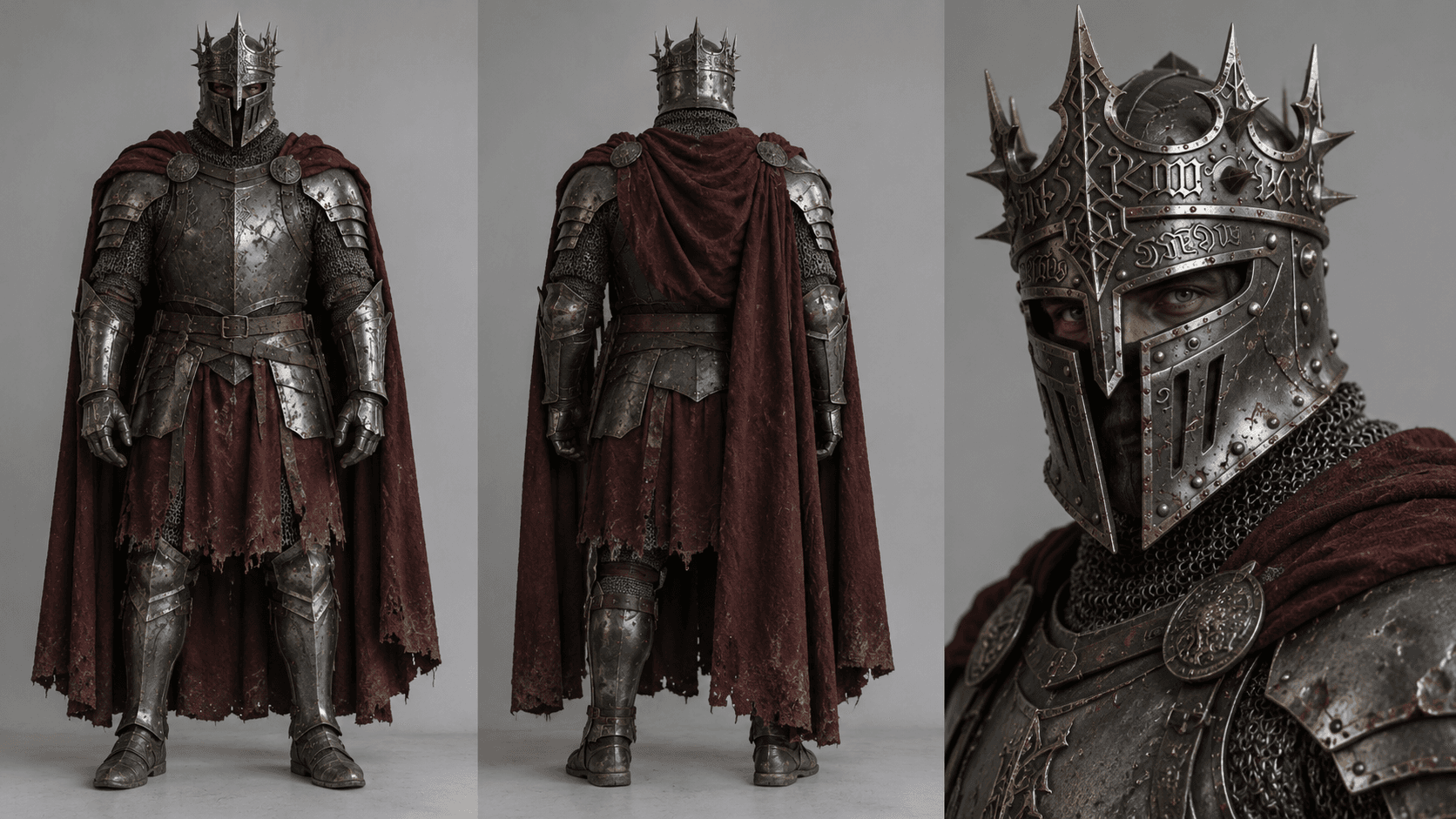
knighteyes
Character
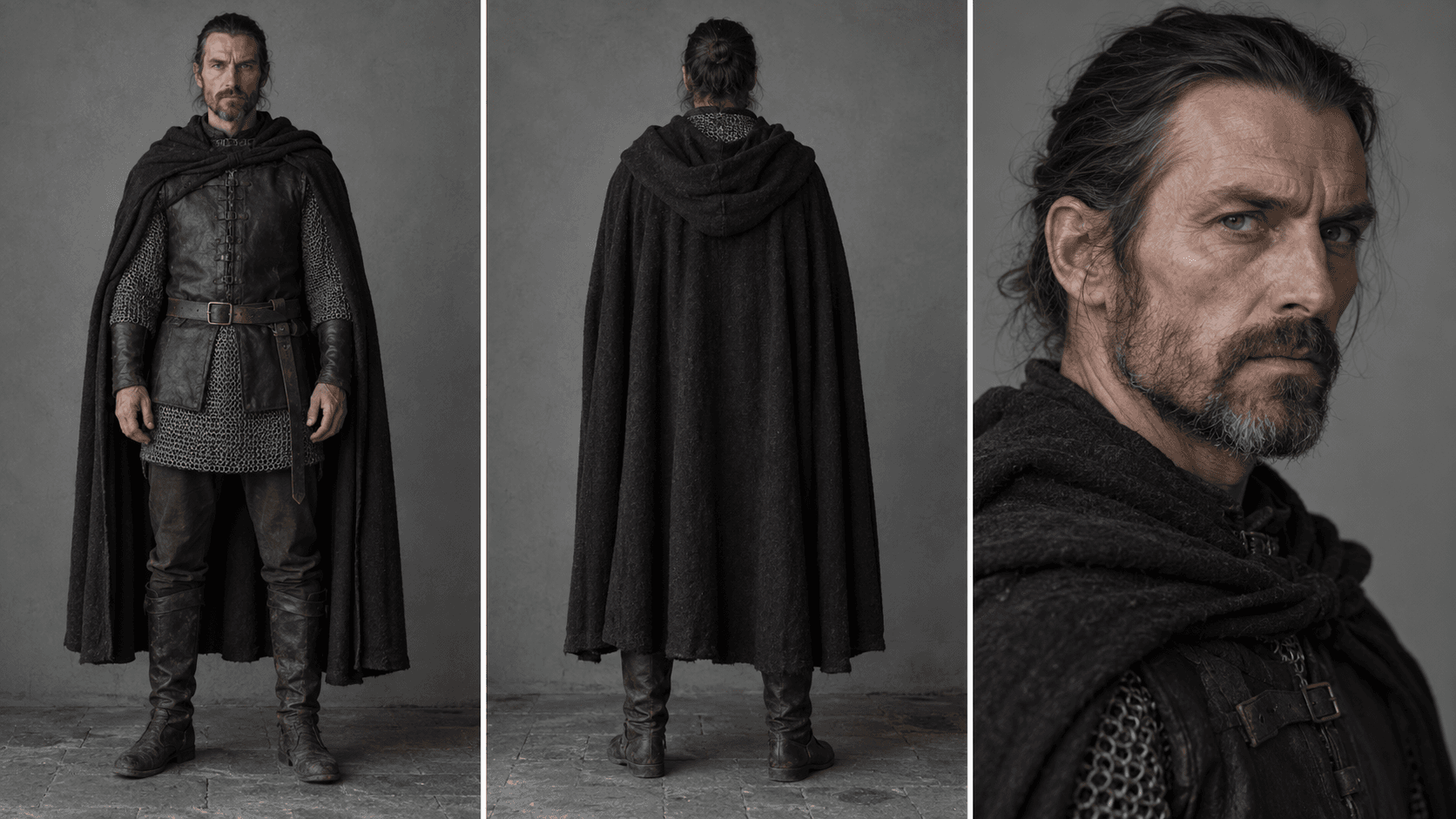
traitor
Character
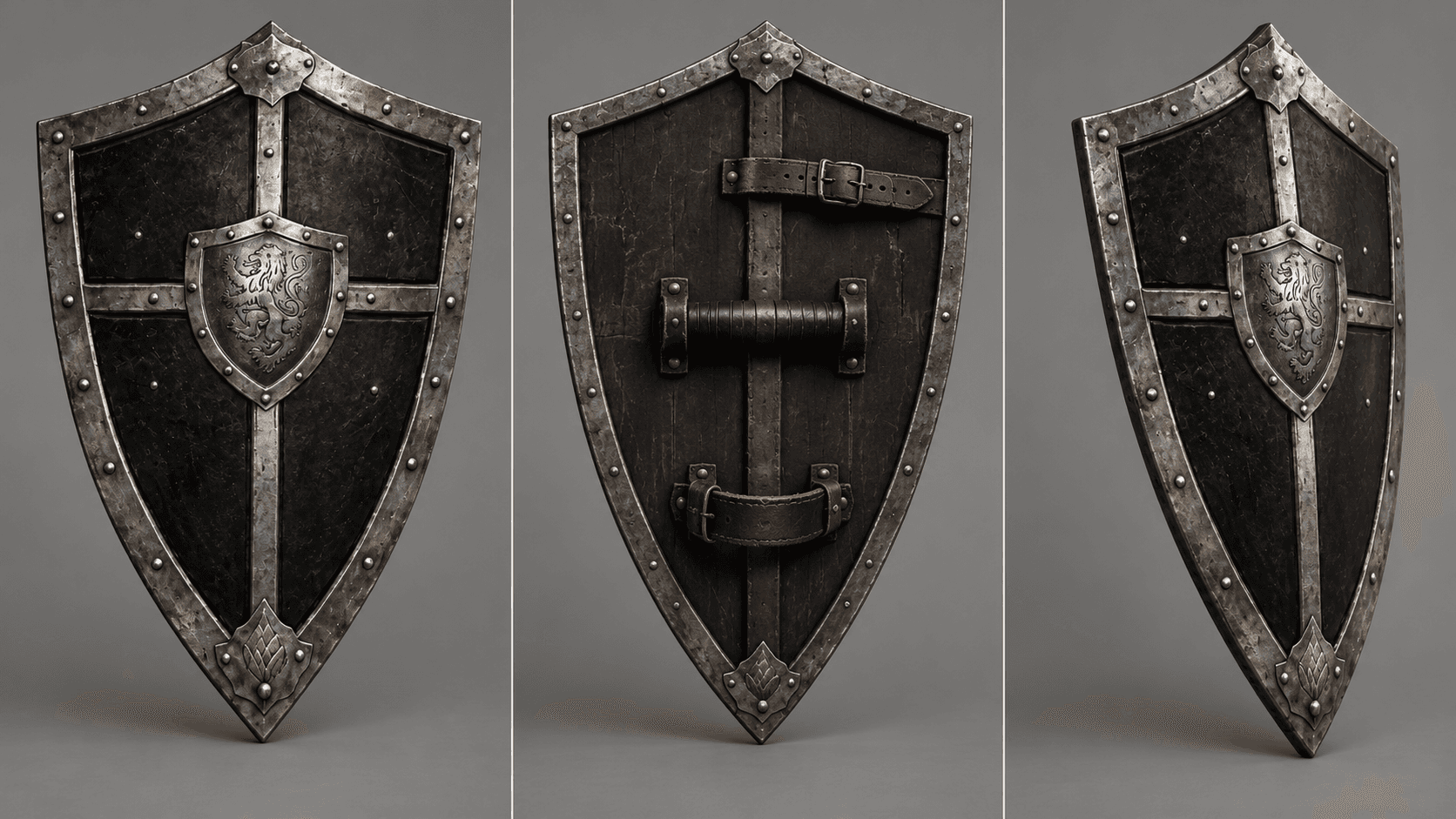
shield
Prop
Settings
16:9480plive-action
AI-generated video, published by the studio owner. Report this page